Historic Centre of Rome
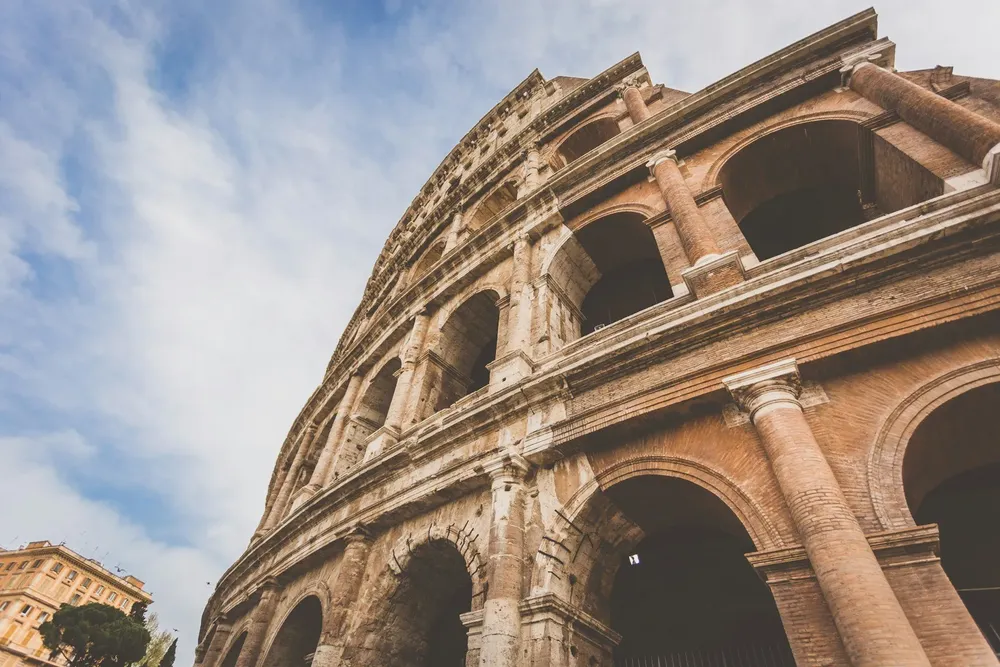
The Forum, the Colosseum, the Pantheon and the Baroque city. UNESCO listing (opens the UNESCO site) ↗︎

Try "Saint-Tropez", "Positano", "truffle" or "Cyprus".
Home›History and Culture›Italy
Greek temples, the Roman Empire, the Renaissance and the opera house: no country has given the world more art. The history, arts and great tables of Italy.
History
Italy's story is many stories. Etruscans ruled central Italy, and from the eighth century BC Greek colonists built Magna Graecia in the south and Sicily, leaving temples at Paestum and Agrigento finer than many in Greece. Rome, by tradition founded in 753 BC, grew from a hill town into an empire that ruled the whole Mediterranean, which Romans called simply mare nostrum, "our sea".
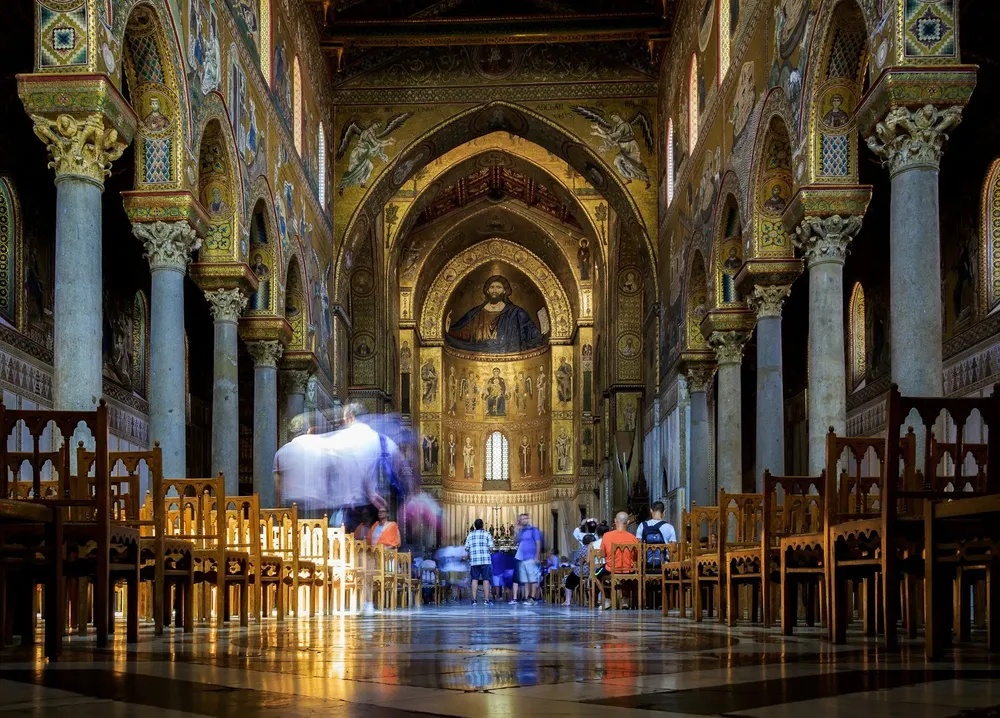
After the fall of the Western Empire in 476, Italy became a patchwork of cities and states. The maritime republics of Venice, Genoa, Pisa and Amalfi grew rich on trade; Norman Sicily blended Latin, Greek and Arab art. In fifteenth-century Florence, under the Medici, the Renaissance began, and Rome's Baroque followed. Italy was united as a kingdom in 1861, with Rome as capital from 1871, and became a republic in 1946.
Etruscan cities in Tuscany; Greek temples in the south and Sicily.
Republic, then Empire from Augustus in 27 BC.
Venice, Genoa, Pisa and Amalfi.
Florence, the Medici, then Rome and Venice.
Bernini and Borromini remake Rome.
The Kingdom of Italy; Rome becomes capital in 1871.
A founding member of the European project in 1957.
Arts and letters
Opera was born in Italy around 1600, and La Scala in Milan, opened in 1778, and La Fenice in Venice remain its temples. The Uffizi, the Vatican Museums and the Venice Biennale, first held in 1895, are fixtures of any cultured life, and Italian design, from Milan's fashion houses to its furniture, is a culture of its own.
The Divine Comedy, written in the Florentine that became Italian.
The Last Supper in Milan.
The David, the Sistine Chapel ceiling and the dome of St Peter's.
From the Vatican rooms to Venice and the Baroque.
St Peter's Square and the Fountain of the Four Rivers.
The heart of the opera repertoire.
At the table
There is no single Italian cuisine, only regional ones. Piedmont has the white truffles of Alba and the wines of Barolo; Emilia-Romagna has Parmigiano Reggiano, prosciutto di Parma and the balsamic vinegar of Modena; Tuscany has Chianti and Brunello; Naples has pizza, its art of the pizzaiuolo recognised by UNESCO; Sicily has Arab-inspired sweets and Etna wines. Italy also has some of the greatest restaurants in the world.
Massimo Bottura, twice named the world's best restaurant.
Enrico Crippa, in white truffle country.
The Santini family, with three stars since 1996.
The Alajmo brothers, near Padua.
A 17th-century palazzo and a legendary cellar.
UNESCO World Heritage
A selection of the finest sites, not the full list.
The Forum, the Colosseum, the Pantheon and the Baroque city. UNESCO listing (opens the UNESCO site) ↗︎
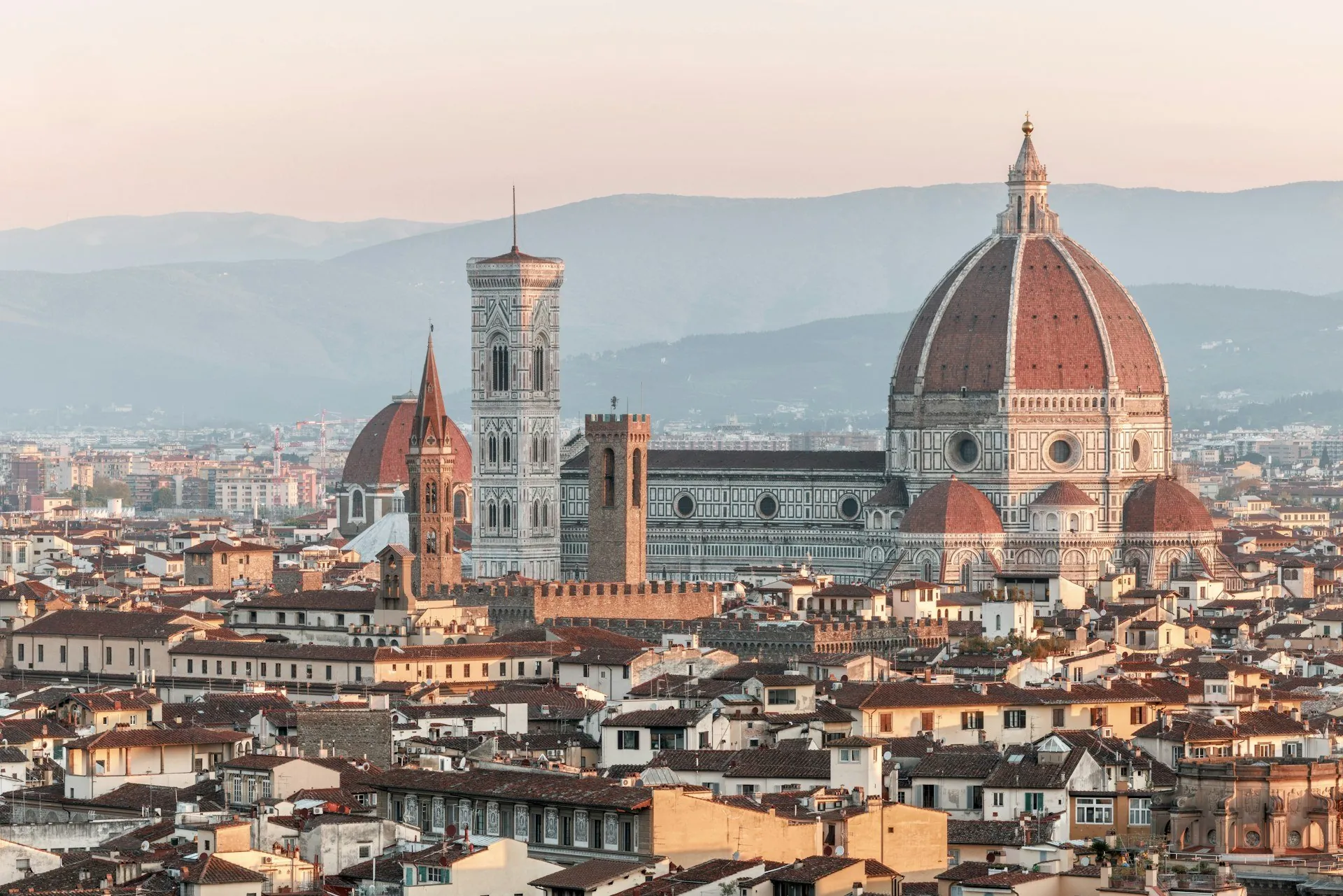
The cradle of the Renaissance: the Duomo, the Uffizi and the Ponte Vecchio. UNESCO listing (opens the UNESCO site) ↗︎
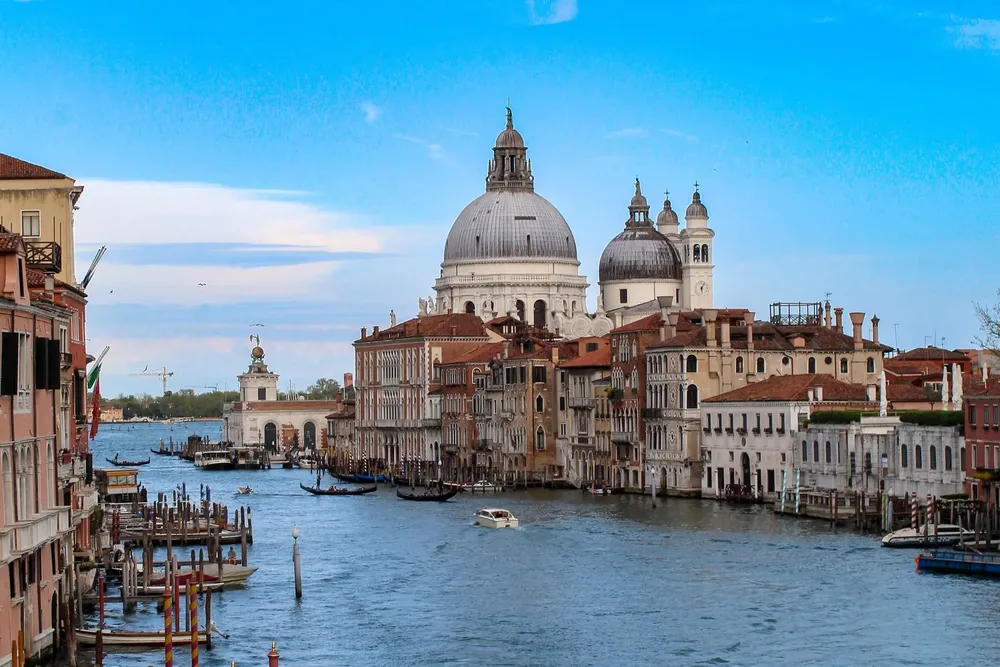
A city built on the water, with its islands. UNESCO listing (opens the UNESCO site) ↗︎
Roman towns buried by Vesuvius in AD 79. UNESCO listing (opens the UNESCO site) ↗︎
The Tuscan landscape of cypresses and hill towns painted in the Renaissance. UNESCO listing (opens the UNESCO site) ↗︎
Plan
Before you go, read our notes on customs and etiquette in Italy: how to greet, what to wear and how to tip.
Keep exploring
Where to stay
From the Journal
From the Journal
From the Journal
The season
Beyond the Mediterranean
The Mediterranean Season Letter
Four letters a year, one for each season: the Mediterranean from spring to autumn, and Beyond the Mediterranean, into the Alps, in winter. The one best hotel to book, and the events worth crossing a sea for.
We use Google Analytics cookies to see how visitors use the site. Accept them, or decline and the site works just the same. Privacy