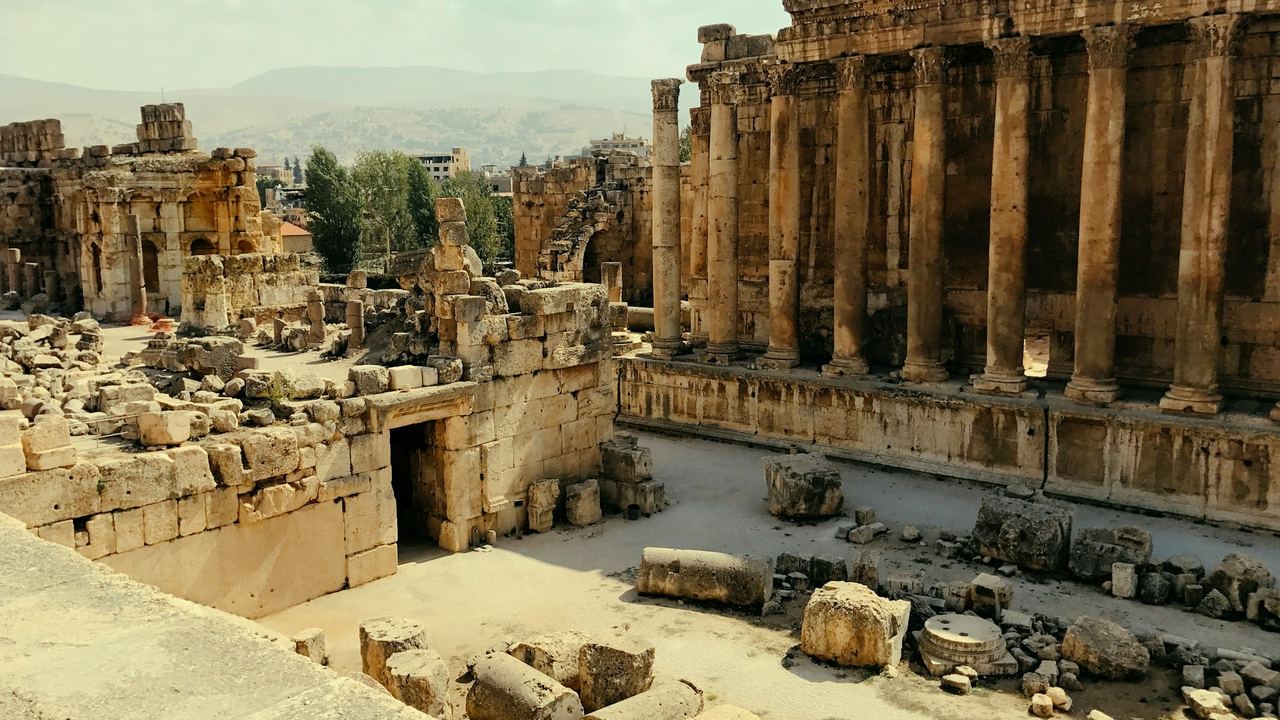
The great columns of the Temple of Bacchus among the ruins of Baalbek
TheMediterranean.com The Luxury Gateway
DestinationsStayResortsSailCruisesFlyTrainsLiveLuxury Real EstateShopDineExperiencePlan a Trip

Home›Mediterranean destinations›Lebanon

Lebanon

From the Roman temples of Baalbek and the Phoenician ports of Byblos and Tyre to the Cedars of God in the Qadisha Valley: the culture and history of Lebanon.

The Temple of Bacchus, BaalbekPhotograph: Fred Nassar

الثقافة

The land of the Phoenicians

Lebanon is the homeland of the Phoenicians, the seafarers who spread the alphabet across the Mediterranean. Byblos, one of the oldest continuously inhabited towns in the world, and Tyre, the island city that withstood Alexander the Great's siege for seven months, are both UNESCO World Heritage Sites.

In the Beqaa Valley, the Roman temples of Baalbek are among the largest and best preserved anywhere, and the Umayyad city of Anjar dates from the eighth century. In the mountains, the Qadisha Valley shelters ancient monasteries beneath the last groves of the Cedars of God, the tree on the national flag.

This is a page of culture and history. No hotel, restaurant or beach club yet meets our standard. Before planning any visit, check your own government's current travel advice.

A few words of Lebanese Arabic
EnglishLebanese ArabicSay it
HelloمرحباMAR-ha-ba
Pleaseإذا بتريدiza bit-REED (to a woman: iza bit-REE-dee)
Thank youشكراًSHUK-ran (merci is also very common)
Good eveningمسا الخيرMA-sa el-KHEYR
Nice to meet youتشرفناtshar-RAF-na

Where to go

The best places to visit in Lebanon

The great sites of Lebanon, each a UNESCO World Heritage Site.

The great sites

Baalbek, the Qadisha Valley and Anjar

Baalbek

In the Beqaa Valley, the Roman sanctuary of Heliopolis has some of the largest and best-preserved temples of the Roman world, including the Temple of Bacchus and the six standing columns of the Temple of Jupiter. Baalbek was inscribed as a UNESCO World Heritage Site in 1984.

Qadisha Valley and the Cedars of God

A deep gorge in the north Lebanon mountains sheltered Christian hermitages and monasteries for centuries, and above it stands one of the last groves of the cedars of Lebanon. Ouadi Qadisha and the Forest of the Cedars of God were inscribed as a UNESCO World Heritage Site in 1998.

Anjar

An early 8th-century Umayyad city in the Beqaa Valley, laid out on a Roman-style grid with walls, gates, palaces and shops. It was inscribed as a UNESCO World Heritage Site in 1984.

Experience

Events and things to do in Lebanon

The finest things to do in and around Lebanon.

The great museums

  • National Museum of BeirutBeirut

    Lebanon's national archaeological museum, opened in 1942.

Opera houses, concert halls and festivals

  • Baalbeck International FestivalBaalbek

    Founded in 1956 among the Roman temples of Baalbek, a UNESCO World Heritage Site, where the 2025 edition staged Bizet's Carmen at the Temple of Bacchus. Visit website (opens the official site) ↗

More of the Mediterranean

Luxury travel across the Mediterranean

Customs and etiquette

Customs and etiquette in Lebanon

How Lebanon does things.

Language
Arabic is the official language; everyday speech is Lebanese Arabic. French and English are both widely used in business, and many Lebanese move easily between all three, often within one sentence.
Greetings
A handshake with eye contact is the norm on first meeting. Close friends often greet with three alternating cheek kisses. With someone of the opposite sex, wait to see whether a hand is offered. Use professional or academic titles where given.
Culture
A small country with a long reach: Phoenician ports such as Byblos and Tyre, the Roman temples of Baalbek, a mosaic of religious communities, and one of the most celebrated cuisines of the Mediterranean.

Every list on this page is checked by hand and dated: last checked October 2026. Hotels, restaurants and events link only to their own official websites, where confirmed.

The Mediterranean Season Letter

Where to be, every season

Four letters a year, one for each season: the Mediterranean from spring to autumn, and Beyond the Mediterranean, into the Alps, in winter. The one best hotel to book, and the events worth crossing a sea for.