Home›Surrounding the Med
Surrounding the Med
The great places just inland, from Provence and Tuscany to Meteora, Cappadocia, Jerusalem and Luxor.
Last checked October 2026.
Try "Saint-Tropez", "Positano", "truffle" or "Cyprus".
Home›Surrounding the Med
The great places just inland, from Provence and Tuscany to Meteora, Cappadocia, Jerusalem and Luxor.
Last checked October 2026.
The wooded hills above Lisbon where Portugal's kings and the 19th-century Romantics built their summer palaces, among them the painted Pena Palace on its peak and the Gothic and Manueline National Palace in the town, with the ruined Moorish Castle on the ridge and the gardens of Monserrate and Quinta da Regaleira. The Cultural Landscape of Sintra was inscribed on the UNESCO World Heritage List in 1995. Visit website (opens the official site) ↗
Terraced vineyards climb the steep schist slopes of the Douro and its side valleys, with the port quintas, white manor houses and the river town of Pinhão below. The Douro was demarcated in 1756, one of the oldest demarcated wine regions in the world, and the Alto Douro Wine Region was inscribed on the UNESCO World Heritage List in 2001. Visit website (opens the official site) ↗
The walled capital of the Alentejo, with a Roman temple, a Romanesque and Gothic cathedral and whitewashed lanes, set in a rolling country of cork oaks, olive groves, wine estates and hilltop villages such as Monsaraz. The Historic Centre of Évora was inscribed on the UNESCO World Heritage List in 1986. Visit website (opens the official site) ↗
Three great monasteries of central Portugal: the Cistercian abbey of Alcobaça with the tombs of King Pedro I and Inês de Castro, the Gothic and Manueline Dominican monastery of Batalha, and the Convent of Christ at Tomar, the seat of the Knights Templar and later the Order of Christ. Each is a UNESCO World Heritage Site: Batalha and Tomar since 1983, Alcobaça since 1989. Visit website (opens the official site) ↗
Above Funchal the island rises to peaks of nearly 1,900 metres, with walking paths along the levadas, the old irrigation channels, through the largest surviving laurel forest, a relic of the forests that once covered southern Europe. The Laurisilva of Madeira was inscribed on the UNESCO World Heritage List in 1999. Visit website (opens the official site) ↗
The capital of Andalusia, built around the largest Gothic cathedral in the world, the Moorish and Mudéjar royal palace of the Alcázar, and the old quarter of Santa Cruz. The Cathedral, the Alcázar and the Archivo de Indias were listed together as a UNESCO World Heritage Site in 1987. Visit website (opens the official site) ↗
The last capital of Moorish Spain, set below the Sierra Nevada. The Nasrid palaces of the Alhambra, the Generalife gardens and the hillside Albayzín quarter are a UNESCO World Heritage Site (listed 1984, extended 1994); entry to the Nasrid palaces is by timed ticket and sells out well ahead. Visit website (opens the official site) ↗
Spain's inland capital, home to the Prado, the Thyssen-Bornemisza and the Reina Sofía within walking distance of one another. The Paseo del Prado and the Buen Retiro park were listed by UNESCO in 2021 as "a landscape of arts and sciences." Visit website (opens the official site) ↗
A hill wine country of terraced slate vineyards in Catalonia, below the cliffs of the Montsant Natural Park. Priorat is one of only two Spanish wine regions, with Rioja, to hold the top DOQ/DOCa classification, and its landmark is the ruined Carthusian monastery of Santa Maria d'Escaladei.
A walled medieval city on the River Onyar, with one of Europe's best-preserved Jewish quarters and a cathedral whose single Gothic nave is among the widest in the world. It is also home to the Roca brothers' El Celler de Can Roca, which holds three MICHELIN stars.
The limestone headland at the mouth of the Mediterranean, one of the ancient Pillars of Hercules, rising some 426 metres above the strait. Its upper slopes form the Upper Rock Nature Reserve, home to Europe's only wild monkeys, the Barbary macaques, with St Michael's Cave and the Great Siege Tunnels, cut into the rock during the Great Siege of 1779 to 1783. At its foot on the south-eastern side, the four sea caves of Gorham's Cave Complex, among the last known homes of the Neanderthals, were inscribed on the UNESCO World Heritage List in 2016. Visit website (opens the official site) ↗
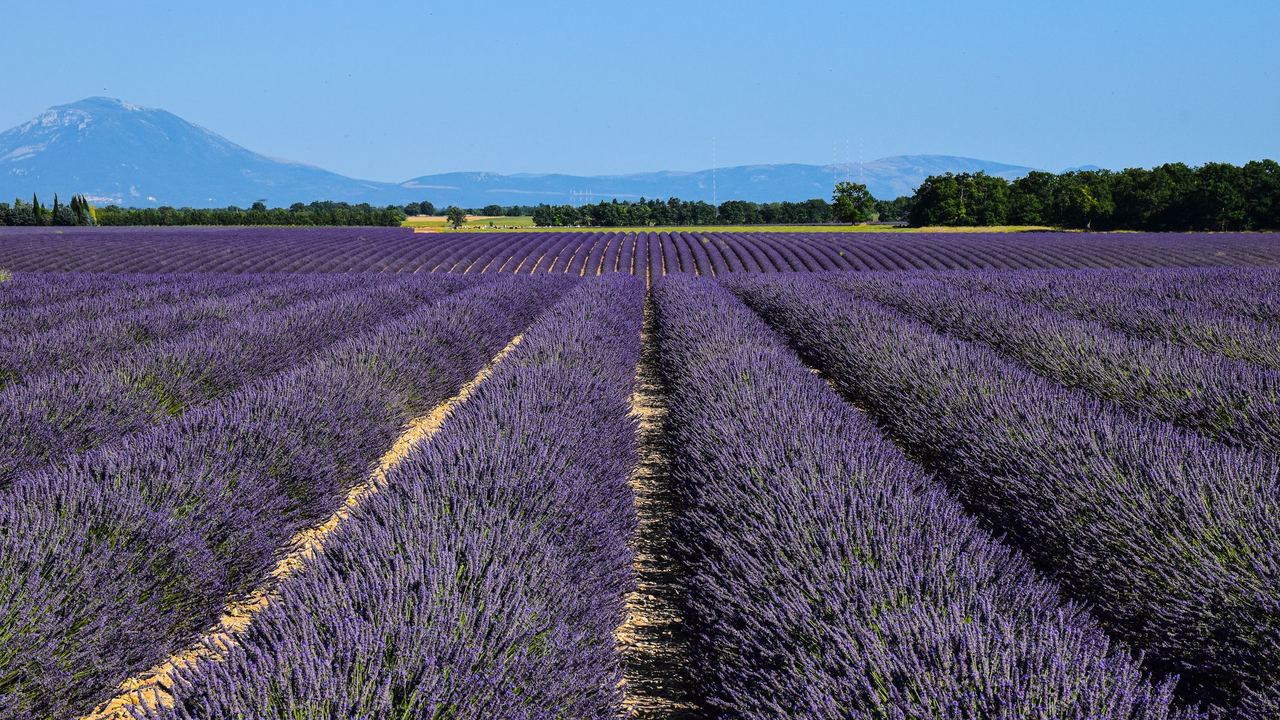
The hill country of Provence, with the perched villages of Gordes, Roussillon and Bonnieux, lavender fields and cherry orchards. The Luberon is protected as a regional natural park and is a UNESCO Biosphere Reserve. Visit website (opens the official site) ↗
A small limestone range between Avignon and Arles, with olive groves, vineyards and the town of Saint-Rémy-de-Provence, where Van Gogh painted some of his best-known canvases. Les Baux, a ruined citadel on a rock spur, is one of the Plus Beaux Villages de France.
The old capital of Provence, a city of fountains, plane-shaded squares and 17th- and 18th-century mansions. Paul Cézanne was born here and painted the nearby Montagne Sainte-Victoire many times, and the Festival d'Aix-en-Provence brings opera to the city each July.
The walled city where the popes lived in the 14th century, dominated by the Palais des Papes. The historic centre, with the Papal Palace, the Episcopal Ensemble and the Pont d'Avignon, is a UNESCO World Heritage Site (1995), and the Festival d'Avignon fills the city with theatre each July. Visit website (opens the official site) ↗
One of Europe's great canyons, cut by the turquoise Verdon river, with cliffs up to 700 metres high and the Lac de Sainte-Croix at its western end. It lies within the Verdon regional natural park, beside the village of Moustiers-Sainte-Marie.
Monaco: no inland places.
The cradle of the Renaissance, with Brunelleschi's dome, the Uffizi and Michelangelo's David at the Accademia. Its historic centre has been a UNESCO World Heritage Site since 1982. Visit website (opens the official site) ↗
The landscape of southern Tuscany most often painted and photographed: cypress-lined roads, hill towns such as Pienza and Montalcino, and the Brunello vineyards. The Val d'Orcia was listed as a UNESCO World Heritage Site in 2004. Visit website (opens the official site) ↗
The Eternal City lies some 25 kilometres inland from the Tyrrhenian coast, with the Colosseum, the Forum, the Pantheon and the Vatican Museums. Its historic centre has been a UNESCO World Heritage Site since 1980. Visit website (opens the official site) ↗
Malta's walled hilltop city, its capital until the Knights of St John arrived in 1530, with quiet lanes, baroque palaces and St Paul's Cathedral. Its ramparts look across most of the island to the sea.
Malta's greener sister island, with the walled Citadel of Victoria and the Ġgantija temples, which are older than Stonehenge and the pyramids of Giza. Ġgantija was listed as a UNESCO World Heritage Site in 1980, later extended as the Megalithic Temples of Malta. Visit website (opens the official site) ↗
An Alpine lake in the Julian Alps with a pilgrimage church on its small island and a medieval castle on the cliff above the water. The church on the island is dedicated to the Assumption of Mary and took its present form in the late 17th century.
Slovenia's small, walkable capital on the Ljubljanica river, shaped in the 20th century by the architect Jože Plečnik. His works in the city, among them the Triple Bridge, the riverside Central Market and the National and University Library, were inscribed on the UNESCO World Heritage List in 2021. Visit website (opens the official site) ↗
A cave system in the Karst where the Reka river runs through an underground canyon 2,600 metres long and up to 146 metres high. It became Slovenia's first UNESCO World Heritage site in 1986, and its Martel Chamber is one of the largest underground chambers in Europe. Visit website (opens the official site) ↗
A chain of lakes linked by waterfalls and travertine barriers in the forested hills between Zagreb and the Dalmatian coast. It was inscribed on the UNESCO World Heritage List in 1979 for the continuing natural formation of its tufa barriers. Visit website (opens the official site) ↗
A walled hill town above the Mirna river valley, with a 13th-century bell tower and the largest secular building of its period in Istria. The Motovun Forest in the valley below is known for Istrian white truffles, in season from September to December.
An Ottoman frontier town on the Neretva river, built around its stone Old Bridge. The bridge and much of the old town were destroyed in the conflict of the 1990s; the bridge was rebuilt in 2004, and the Old Bridge Area was inscribed on the UNESCO World Heritage List in 2005. Visit website (opens the official site) ↗
The largest lake on the Balkan Peninsula, shared with Albania, with island monasteries and Ottoman-era fortifications. It became a national park in 1983 and supports some 270 bird species. Visit website (opens the official site) ↗
A high limestone massif in the north with glacial lakes, known locally as "mountain eyes," and the gorge of the Tara river, the deepest in Europe. It was inscribed on the UNESCO World Heritage List in 1980. Visit website (opens the official site) ↗
A hill town in central Albania with white Ottoman houses below a castle, the Kala, built mainly in the 13th century. It is part of the UNESCO World Heritage site Historic Centres of Berat and Gjirokastra, and its Byzantine churches date from the 13th century. Visit website (opens the official site) ↗
A stone town in the Drinos valley of southern Albania, built around a 13th-century citadel, with tall tower houses from the 17th to 19th centuries and a traditional bazaar. It shares the UNESCO World Heritage listing with Berat. Visit website (opens the official site) ↗
A group of sandstone pillars in Thessaly topped by Orthodox monasteries, where monks settled from the 11th century onward. Meteora was inscribed on the UNESCO World Heritage List in 1988. Visit website (opens the official site) ↗
The sanctuary of Apollo on the slopes of Mount Parnassus, home of the oracle and of the Pythian Games, which the ancient Greeks regarded as the centre of the world. It was inscribed on the UNESCO World Heritage List in 1987. Visit website (opens the official site) ↗
Stone villages, arched stone bridges and the Vikos Gorge on the western slopes of the northern Pindus mountains. The Zagori Cultural Landscape was inscribed on the UNESCO World Heritage List in 2023. Visit website (opens the official site) ↗
The sanctuary of Zeus in a river valley of the western Peloponnese, where the Olympic Games were held from 776 BC for more than a thousand years. It was inscribed on the UNESCO World Heritage List in 1989. Visit website (opens the official site) ↗
The ruined Byzantine city on a hill near Sparta, founded as a fortress in 1249 and later the seat of the Despotate of Morea, with churches and palaces of the late Byzantine period. It was inscribed on the UNESCO World Heritage List in 1989. Visit website (opens the official site) ↗
A volcanic plateau in central Anatolia of eroded rock cones ("fairy chimneys"), cave villages and Byzantine churches cut into the rock, best seen from a hot-air balloon at dawn. Göreme National Park and the Rock Sites of Cappadocia were inscribed as a UNESCO World Heritage Site in 1985. Visit website (opens the official site) ↗
White travertine terraces filled with warm mineral water spill down a hillside above the Lycos valley, crowned by the ruins of the Roman spa city of Hierapolis and its theatre. Hierapolis-Pamukkale has been a UNESCO World Heritage Site since 1988. Visit website (opens the official site) ↗
The best-preserved Greco-Roman city in the eastern Mediterranean, with the Library of Celsus, the Great Theatre and the terrace houses, a few kilometres inland from the Aegean near Selçuk. Ephesus was inscribed as a UNESCO World Heritage Site in 2015. Visit website (opens the official site) ↗
On a summit in the Taurus range in southeastern Türkiye, colossal stone heads of gods and kings guard the 1st-century BC tomb-sanctuary of King Antiochus I of Commagene. Nemrut Dağ has been a UNESCO World Heritage Site since 1987; the summit is visited at sunrise or sunset. Visit website (opens the official site) ↗
The pine-covered Troodos range rises to Mount Olympus at the island's centre, with stone villages, monasteries and vineyards on its slopes. Ten of its Byzantine and post-Byzantine churches, covered inside with frescoes, form a UNESCO World Heritage Site first inscribed in 1985. Visit website (opens the official site) ↗
One of the best-preserved prehistoric settlements in the eastern Mediterranean, a Neolithic village of round stone houses on a hillside in the Maroni valley, with several houses reconstructed beside the excavations. It was inscribed as a UNESCO World Heritage Site in 1998. Visit website (opens the official site) ↗
Culture and history only: no travel planning.
An oasis city in the Syrian desert that grew rich on the caravan trade between Rome, Persia and India, leaving colonnaded streets, temples and tower tombs that blend Greco-Roman and local traditions. It was inscribed as a UNESCO World Heritage Site in 1980 and has been on the List of World Heritage in Danger since 2013; the Temple of Bel was destroyed in 2015. Visit website (opens the official site) ↗
Held by the Knights Hospitaller from the 12th century, the Krak is the most complete Crusader castle to survive, set on a ridge above the Homs Gap. It is inscribed with Qal'at Salah El-Din as a single UNESCO World Heritage Site (2006). Visit website (opens the official site) ↗
One of the oldest continuously inhabited cities in the world, its walled old city holds the Umayyad Mosque, souks, khans and courtyard houses. It was inscribed as a UNESCO World Heritage Site in 1979. Visit website (opens the official site) ↗
A crossroads of trade routes for millennia, Aleppo is known for its citadel on a mound above the old city and its covered souks. It was inscribed as a UNESCO World Heritage Site in 1986; much of the old city was damaged during the war. Visit website (opens the official site) ↗
Culture and history only: no travel planning.
In the Beqaa Valley, the Roman sanctuary of Heliopolis has some of the largest and best-preserved temples of the Roman world, including the Temple of Bacchus and the six standing columns of the Temple of Jupiter. Baalbek was inscribed as a UNESCO World Heritage Site in 1984. Visit website (opens the official site) ↗
A deep gorge in the north Lebanon mountains sheltered Christian hermitages and monasteries for centuries, and above it stands one of the last groves of the cedars of Lebanon. Ouadi Qadisha and the Forest of the Cedars of God were inscribed as a UNESCO World Heritage Site in 1998. Visit website (opens the official site) ↗
An early 8th-century Umayyad city in the Beqaa Valley, laid out on a Roman-style grid with walls, gates, palaces and shops. It was inscribed as a UNESCO World Heritage Site in 1984. Visit website (opens the official site) ↗
The Old City inside its Ottoman walls holds the Western Wall, the Church of the Holy Sepulchre and the Dome of the Rock within a few hundred metres of one another, sacred to Judaism, Christianity and Islam. UNESCO lists it as the Old City of Jerusalem and its Walls, inscribed on the World Heritage List in 1981. Visit website (opens the official site) ↗
Herod's clifftop fortress above the Dead Sea was the last stronghold of the Jewish revolt against Rome, and it is reached by cable car or the Snake Path at dawn. Masada is a UNESCO World Heritage Site (2001); the Dead Sea shore below is the lowest point on land, about 430 metres below sea level. Visit website (opens the official site) ↗
Northern Israel's hills and lake country, around the Sea of Galilee, the lowest freshwater lake on earth, with Nazareth and Capernaum close by. It is the setting of much of the Gospels.
The pyramids of Giza, including the Great Pyramid, the only one of the Seven Wonders of the Ancient World still standing, sit on the edge of Cairo beside the new Grand Egyptian Museum; the medieval city of Historic Cairo lies across the Nile. Memphis and its Necropolis, the pyramid fields from Giza to Dahshur, was inscribed as a UNESCO World Heritage Site in 1979. Visit website (opens the official site) ↗
Ancient Thebes, capital of Egypt's New Kingdom, with the temples of Karnak and Luxor on the east bank and the Valleys of the Kings and the Queens on the west. Ancient Thebes with its Necropolis was inscribed as a UNESCO World Heritage Site in 1979. Visit website (opens the official site) ↗
Aswan sits where the Nile runs between granite islands and Nubian villages, with the island temple of Philae nearby; to the south, the rock temples of Ramesses II at Abu Simbel were cut apart and moved to higher ground in the 1960s to save them from the waters of the Aswan High Dam. The Nubian Monuments from Abu Simbel to Philae were inscribed as a UNESCO World Heritage Site in 1979. Visit website (opens the official site) ↗
Culture and history only: no travel planning.
On the coast east of Tripoli, the birthplace of the emperor Septimius Severus, who rebuilt it in marble: a forum and basilica, a theatre facing the sea, the Hadrianic baths and a harbour, among the best-preserved Roman cities anywhere. The Archaeological Site of Leptis Magna was inscribed as a UNESCO World Heritage Site in 1982. Visit website (opens the official site) ↗
West of Tripoli, a Phoenician trading post that became a Roman city, best known for its theatre of the late second century, whose three-storey stage wall of columns stands above the sea. The Archaeological Site of Sabratha was inscribed as a UNESCO World Heritage Site in 1982. Visit website (opens the official site) ↗
In the green hills of the east, founded by Greeks from Thera around 630 BC, with the sanctuary of Apollo, a temple of Zeus and a necropolis cut into the hillside; it was one of the great cities of the Greek world. The Archaeological Site of Cyrene was inscribed as a UNESCO World Heritage Site in 1982. Visit website (opens the official site) ↗
The "pearl of the desert," an oasis town near the borders with Tunisia and Algeria, built as a maze of whitewashed mud-brick houses linked by covered lanes, with rooftop walkways for the women of the town. The Old Town of Ghadamès was inscribed as a UNESCO World Heritage Site in 1986; it was on the List of World Heritage in Danger from 2016 until 2025. Visit website (opens the official site) ↗
A range of sandstone mountains in the far southwest of the Libyan Sahara, its rock shelters painted and engraved over thousands of years with animals and scenes of life from a once-green Sahara. The Rock-Art Sites of Tadrart Acacus were inscribed as a UNESCO World Heritage Site in 1985 and have been on the List of World Heritage in Danger since 2016. Visit website (opens the official site) ↗
In a small town on the Sahel plain stands one of the largest Roman amphitheatres ever built, a 3rd-century arena that seated about 35,000 spectators. The Amphitheatre of El Jem was inscribed as a UNESCO World Heritage Site in 1979. Visit website (opens the official site) ↗
A hilltop Roman town in the wheat country of northern Tunisia, with its capitol, theatre, temples and houses unusually complete. Dougga/Thugga was inscribed as a UNESCO World Heritage Site in 1997. Visit website (opens the official site) ↗
Founded in 670, Kairouan was the first great Islamic city of the Maghreb, and its Great Mosque is one of the oldest and most important in North Africa. Kairouan was inscribed as a UNESCO World Heritage Site in 1988. Visit website (opens the official site) ↗
A sandstone plateau in the Algerian Sahara, carved into rock forests and canyons, with one of the world's great collections of prehistoric rock art. It was inscribed as a UNESCO World Heritage Site in 1982 for both its culture and its nature. Visit website (opens the official site) ↗
Five fortified ksour (walled towns) built from the 10th century in a desert valley, their plain, functional architecture later admired by modern architects. The M'Zab Valley was inscribed as a UNESCO World Heritage Site in 1982. Visit website (opens the official site) ↗
A Roman colonial town founded by the emperor Trajan around AD 100 on the high plains below the Aurès Mountains, its grid of streets and its triumphal arch still clear. Timgad was inscribed as a UNESCO World Heritage Site in 1982. Visit website (opens the official site) ↗
A Roman mountain town at about 900 metres in the hills of northeastern Algeria, with forum, temples, basilicas and houses spread along a ridge. Djémila was inscribed as a UNESCO World Heritage Site in 1982. Visit website (opens the official site) ↗
Fes el-Bali is one of the largest car-free urban areas in the world, a medina of souks, tanneries, madrasas and the al-Qarawiyyin mosque and university, founded in 859. The Medina of Fez was inscribed as a UNESCO World Heritage Site in 1981. Visit website (opens the official site) ↗
Meknes was the imperial city of Sultan Moulay Ismail, with monumental gates and walls; half an hour away, Volubilis is the best-preserved Roman town in Morocco, known for its mosaics. Volubilis (1997) and the Historic City of Meknes (1996) are UNESCO World Heritage Sites. Visit website (opens the official site) ↗
The red city at the foot of the High Atlas, with the Koutoubia mosque, the Jemaa el-Fna square, palaces and gardens inside its medina walls. The Medina of Marrakesh was inscribed as a UNESCO World Heritage Site in 1985. Visit website (opens the official site) ↗
Berber villages, walnut groves and terraced valleys lie in the shadow of Jebel Toubkal, the highest peak in North Africa, an hour's drive from Marrakech. It is the base for mountain walks, mule treks and the climb to the summit.
A fortified earthen village (ksar) climbing a hillside above a river on the old caravan route between the Sahara and Marrakech, used as a setting for films including Lawrence of Arabia and Gladiator. The Ksar of Ait-Ben-Haddou was inscribed as a UNESCO World Heritage Site in 1987. Visit website (opens the official site) ↗
The Mediterranean Season Letter
Four letters a year, one for each season: the Mediterranean from spring to autumn, and Beyond the Mediterranean, into the Alps, in winter. The one best hotel to book, and the events worth crossing a sea for.
We use Google Analytics cookies to see how visitors use the site. Accept them, or decline and the site works just the same. Privacy