Home›Residency and Golden Visas
Residency and Golden Visas
The official residency and citizenship programmes around the Mediterranean, each linked to its government page.
Last checked October 2026.
Try "Saint-Tropez", "Positano", "truffle" or "Cyprus".
Home›Residency and Golden Visas
The official residency and citizenship programmes around the Mediterranean, each linked to its government page.
Last checked October 2026.
Run by AIMA, the Agency for Integration, Migration and Asylum, it grants residence to non-EU investors and their families for €500,000 in Portuguese investment funds that do not invest in real estate (with a maturity of at least five years and at least 60 per cent invested in Portuguese companies), €500,000 in scientific research (€400,000 in low-density regions), €250,000 for the arts or national heritage (€200,000 in low-density regions), €500,000 to set up or recapitalise a Portuguese company that creates five permanent jobs, or the creation of ten jobs. Property purchases no longer qualify. The stay required is short (seven days in the first year, then fourteen days in each later two-year period), and permanent residence can be sought after five years. Since May 2026, citizenship requires ten years of legal residence for most applicants (seven for EU and Portuguese-speaking nationals), counted from the date the first residence permit is issued. Visit website (opens the official site) ↗
A tax regime, not a residence permit, which replaced the former non-habitual resident (NHR) regime for new arrivals. For ten years, people who become Portuguese tax residents after five years abroad pay a flat 20 per cent on Portuguese employment and self-employment income from qualifying work (research and teaching, highly qualified professions including company directors, certified startups and companies recognised by AICEP or IAPMEI), and most foreign income is exempt, except income from blacklisted tax havens, taxed at 35 per cent. Registration is made on the tax authority's Portal das Finanças by mid-January of the year after arrival. Visit website (opens the official site) ↗
A tax-residence status for wealthy new residents of the British Overseas Territory, issued by the Government's Finance Centre to people who have not lived in Gibraltar in the previous five years. New applicants must hold net assets of at least £5 million (raised from £2 million in 2026; existing holders keep their status) and keep approved residential accommodation in Gibraltar, bought or rented, for their exclusive use all year. Tax is charged only on the first £118,000 of income, with a minimum of £37,000 a year and a maximum of about £44,740. A spouse or child may share the certificate. Holders generally may not work or run a business in Gibraltar, and the status gives no right to publicly funded schooling or healthcare. Gibraltar is outside the EU and the Schengen area. Visit website (opens the official site) ↗
A tax status for senior executives who bring specialist skills not available in Gibraltar and needed for economic activity of particular value to it, open to people not resident there in the previous three years. Tax is charged only on the first £160,000 of annual income (about £39,940 a year at most), and approved residential accommodation must be kept for the holder's exclusive use.
Residence (not an investment programme). The Principality's Residency Section of the Police Department issues a temporary one-year card first, on proof of suitable housing (owned or rented) and sufficient financial resources; the official page sets no fixed sum. Visit website (opens the official site) ↗
Run by the Ministry of Enterprises and Made in Italy, it grants a two-year residence for non-EU investors, renewable for three more, for €2 million in Italian government bonds, €500,000 in an Italian company, €250,000 in an innovative startup or a €1 million philanthropic donation. Property purchases do not qualify. Visit website (opens the official site) ↗
A tax regime, not a residence permit, administered by the Agenzia delle Entrate. People who take Italian tax residency after at least nine of the previous ten years abroad can pay a fixed €300,000 a year in place of Italian income tax on their foreign income, plus €50,000 for each family member included, for up to 15 years; the €300,000 amount applies to those arriving from 2026.
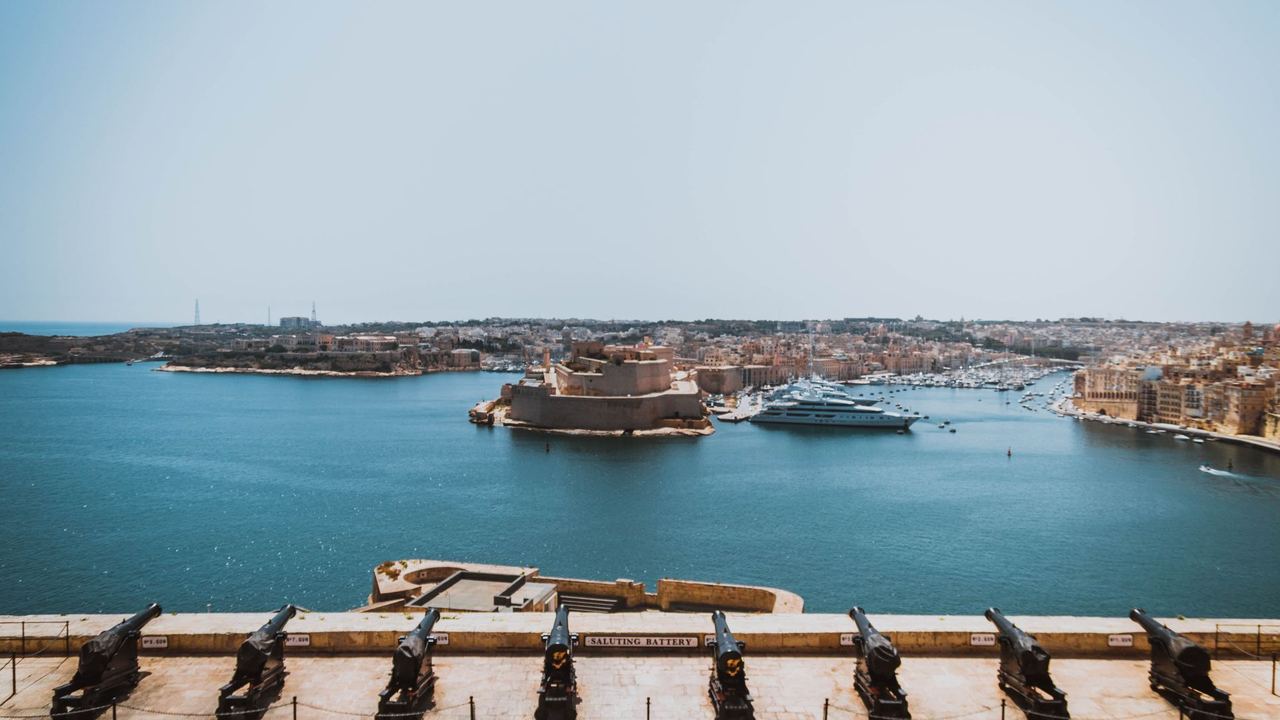
Administered by the government agency Residency Malta, it grants the right to settle and reside permanently in Malta, with Schengen travel, and can cover up to four generations. It requires buying property of at least €375,000 or renting at €14,000 a year, a €60,000 administration fee, a €37,000 government contribution (the same whether the home is bought or rented) and a €2,000 donation to a local NGO. Visit website (opens the official site) ↗
A five-year, renewable residence permit for non-EU property buyers and their families, with no minimum-stay requirement. Since the 2024 reforms the minimum is €800,000 for a single property in Attica, Thessaloniki, Mykonos, Santorini and islands of more than 3,100 residents, and €400,000 elsewhere, in each case for a home of at least 120 square metres; a €250,000 route remains for converting commercial buildings to homes or restoring listed buildings. Homes bought under the programme may not be let as short-term holiday rentals.
Citizenship, including spouse and children under 18, for buying real estate worth at least USD 400,000 and holding it for three years. Other routes require USD 500,000 in a bank deposit, government bonds, investment funds, private pension or fixed capital, or the creation of 50 jobs; all applications are approved by the President. Visit website (opens the official site) ↗
Granted by the Ministry of Interior's Civil Registry and Migration Department for an investment of at least €300,000 plus VAT, usually a new property bought from a developer, with secured annual income from abroad of at least €50,000 plus allowances for family. The permit is open-ended for the applicant and family, provided the investment is kept and the holder visits Cyprus at least once every two years.
That makes 11 entries in all.
The Mediterranean Season Letter
Four letters a year, one for each season: the Mediterranean from spring to autumn, and Beyond the Mediterranean, into the Alps, in winter. The one best hotel to book, and the events worth crossing a sea for.
We use Google Analytics cookies to see how visitors use the site. Accept them, or decline and the site works just the same. Privacy