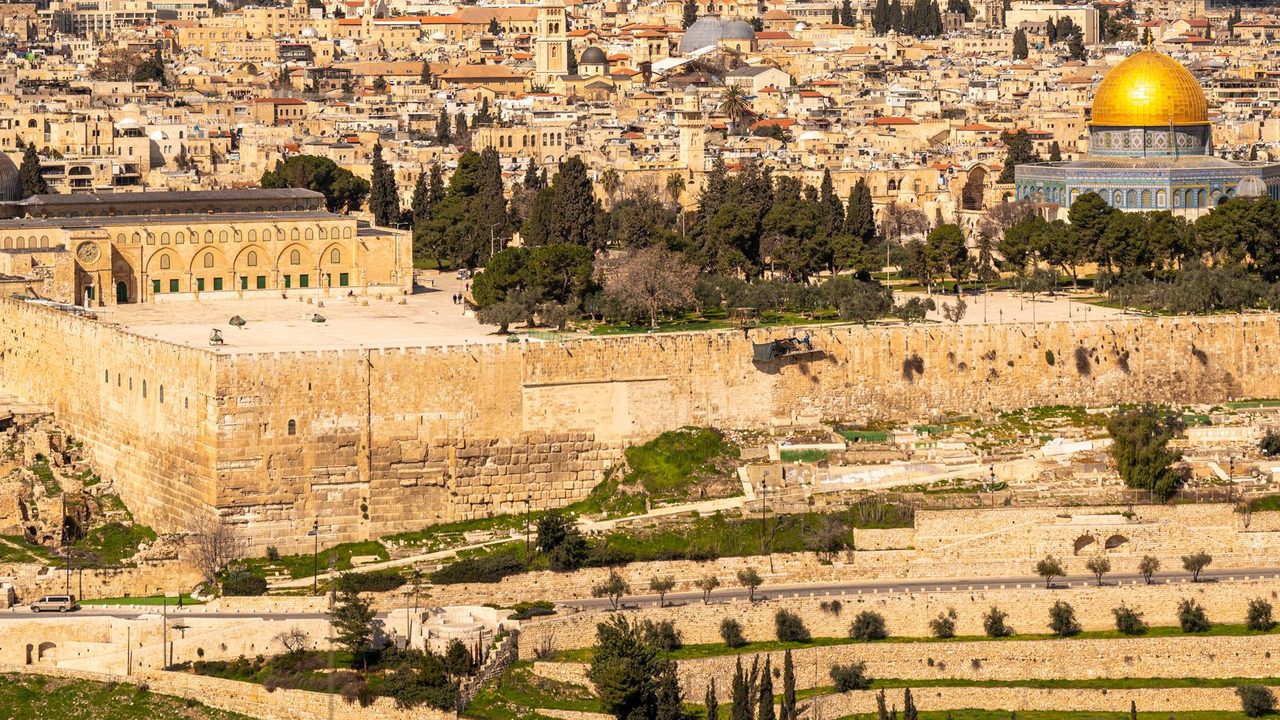
The Old City of Jerusalem, its walls and the golden Dome of the Rock, from the Mount of Olives
TheMediterranean.com The Luxury Gateway
DestinationsStayResortsSailCruisesFlyTrainsLiveLuxury Real EstateShopDineExperiencePlan a Trip

Home›Mediterranean destinations›Israel›Jerusalem

Luxury in Israel

Jerusalem

A city holy to three faiths: the walled Old City of golden stone, the King David Hotel facing its walls, the Israel Museum and the Dead Sea Scrolls, and the desert beyond.

The Old City from the Mount of Olives, JerusalemPhotograph: DAVKA

Shalom

The golden city

Jerusalem is sacred to Judaism, Christianity and Islam, and within the walls of its Old City, rebuilt by Suleiman the Magnificent in the sixteenth century, lie the Western Wall, the Church of the Holy Sepulchre and the Dome of the Rock. The Old City and its walls are a UNESCO World Heritage Site.

The whole city is built of the same pale limestone, which turns gold at sunset, and its quarters, Jewish, Christian, Muslim and Armenian, each keep their own life. The Mount of Olives looks across the valley to the walls.

The King David Hotel, opened in 1931, faces the Old City across the valley, and the Israel Museum holds the Dead Sea Scrolls in its Shrine of the Book. The Dead Sea lies an hour to the east, with Masada beyond it in the desert.

A few words of Hebrew
EnglishHebrewSay it
Helloשָׁלוֹםsha-LOHM
Pleaseבְּבַקָּשָׁהbe-va-ka-SHA
Thank youתּוֹדָהtoh-DA
Good eveningעֶרֶב טוֹבE-rev TOHV
The bill, pleaseהַחֶשְׁבּוֹן, בְּבַקָּשָׁהha-khesh-BOHN, be-va-ka-SHA

Where to go

Jerusalem at a glance

When to go.

Jerusalem

The Old City inside its Ottoman walls holds the Western Wall, the Church of the Holy Sepulchre and the Dome of the Rock within a few hundred metres of one another, sacred to Judaism, Christianity and Islam. UNESCO lists it as the Old City of Jerusalem and its Walls, inscribed on the World Heritage List in 1981.

Best time to visitMarch to May, and October to November.

  • Stay
    No hotel here yet meets our standard; the King David Hotel, facing the Old City walls, is the city's historic grand address.

Masada and the Dead Sea

Herod's clifftop fortress above the Dead Sea was the last stronghold of the Jewish revolt against Rome, and it is reached by cable car or the Snake Path at dawn. Masada is a UNESCO World Heritage Site (2001); the Dead Sea shore below is the lowest point on land, about 430 metres below sea level.

Best time to visitNovember to April; summer heat is extreme.

  • Stay
    No hotel here yet meets our standard; plan a short stay from Jerusalem.

Experience

Events and things to do in Jerusalem

The Jerusalem year: the great events, month by month; each event's own website gives this year's dates.

The great museums

Wine estates that receive visitors

  • Domaine du CastelYad HaShmona (Judean Hills)

    The family estate founded by Eli Ben Zaken, the producer that put Israeli fine wine on the international map, receiving visitors by appointment in the hills west of Jerusalem. Visit website (opens the official site) ↗

Plan your trip

Luxury travel in Jerusalem and the Mediterranean: your questions answered

Plan your journey to Jerusalem

Where is Jerusalem?

In the Judean hills of Israel, about 60 kilometres inland from the Mediterranean. Ben Gurion airport takes private jets and is about 45 minutes away; Tel Aviv is about an hour by road or train.

What is Jerusalem famous for?

Its Old City and holy places sacred to three faiths, the Western Wall, the Church of the Holy Sepulchre and the Dome of the Rock, the King David Hotel, and the Israel Museum.

Do you tip in Jerusalem?

Service is usually not included. Around 10–12% is customary in restaurants, 15% for excellent service, ideally in cash. Luxury hotels: porters ₪10–20 a bag, housekeeping ₪20–40 a day, ₪20–50 for concierge help. Taxi fares are usually rounded up; ₪10–20 for airport transfers with luggage. Private guides commonly receive around ₪100–150 a day per family or small group.

What should you wear in Jerusalem?

At synagogues, most churches and all mosques, cover shoulders and knees; entry is normally refused with bare legs, and women may be offered a wrap. Men cover their heads at the Western Wall and in synagogues (paper kippot are usually provided). In ultra-Orthodox neighbourhoods, wear long sleeves and long trousers or skirts. Fine dining is generally smart-casual; jackets are rarely required.

Beyond Jerusalem

More in Israel

Tel Aviv and the Mediterranean beyond.

Customs and etiquette

Customs and etiquette in Jerusalem

How Israel does things.

Language
Hebrew is the official language, and Arabic has a recognised special status. English is widely spoken, particularly in hotels, restaurants and anywhere visitors gather; Russian and French are also commonly heard.
Greetings
A handshake is usual, and Israeli manners are famously direct and informal; first names are used quickly. In Orthodox Jewish and some Muslim settings, a man and a woman may not shake hands, so let the other person lead.
Dress
At synagogues, most churches and all mosques, cover shoulders and knees; entry is normally refused with bare legs, and women may be offered a wrap. Men cover their heads at the Western Wall and in synagogues (paper kippot are usually provided). In ultra-Orthodox neighbourhoods, wear long sleeves and long trousers or skirts. Fine dining is generally smart-casual; jackets are rarely required.
Dining
Restaurants usually serve lunch from about midday and dinner from around 7.30–8 pm, with Tel Aviv running later. Reserve ahead for well-known restaurants, especially Thursday and Friday nights. Many restaurants in Jerusalem and in hotels are kosher, so meat and dairy are not served together.
Tipping
Service is usually not included. Around 10–12% is customary in restaurants, 15% for excellent service, ideally in cash. Luxury hotels: porters ₪10–20 a bag, housekeeping ₪20–40 a day, ₪20–50 for concierge help. Taxi fares are usually rounded up; ₪10–20 for airport transfers with luggage. Private guides commonly receive around ₪100–150 a day per family or small group.
Good to know
Shabbat runs from Friday sunset to Saturday sunset. Many shops and much public transport stop, especially in Jerusalem, while Tel Aviv stays livelier; avoid driving into Orthodox neighbourhoods during Shabbat. Plan Friday afternoons and Saturdays with this in mind.

Every list on this page is checked by hand and dated: last checked October 2026. Hotels, restaurants and events link only to their own official websites, where confirmed.

The Mediterranean Season Letter

Where to be, every season

Four letters a year, one for each season: the Mediterranean from spring to autumn, and Beyond the Mediterranean, into the Alps, in winter. The one best hotel to book, and the events worth crossing a sea for.